At some point, my phone decided that I really wanted anime news (correct) and that I should get it from something called CBR (less correct). I’m not sure what CBR is but their anime articles haven’t impressed me much. I find better on WordPress every day. I get the feeling that they just realized that their readership had an interest in anime and tacked on an anime section but didn’t really do that much for it. So it’s just their regular contributors that maybe watch anime once in a while or used to watch it when they were young that put together SEO-friendly posts. You probably know the type.
Anyways, one of these posts was why You Should Give Shoujo Anime a try. Already the title makes me a little suspicious. Sure, Shonen dominated the industry for a long time and is still probably the most popular genre, but I feel like, in the past few years, shoujo has really grown in popularity and most anime fans do not need an article convincing them to watch it.
Since writing this post, the same site just came out with a list of “dark” slice of life anime and apparently Wonder Egg Priority is one. And now I don’t know what Slice of Life is either. Just goes to show you anime genres are very random things!
Second Ed Note – I am rereading this post today, when it published. I wrote it a while ago and I feel I’m coming off very harsh towards this CBR site. I personally don’t like their anime articles that much but I haven’t followed them too closely. Maybe they have a lot of great anime content. and if you enjoy it, then great!


I’m getting distracted, this isn’t actually about the popularity of shoujo or the random nature of anime descriptors. What actually caught my attention was the fact that the anime they relied on to make their point was Puella Magi Madoka Magica (do any of you guys ever use the full name of the series? I have to look it up every time). And that confused me.
You see, I always thought that Madoka was a seinen. And not like a vague belief, it’s always been ingrained as fact in my head. I mean it’s an all-girl universe with some implied Yuri I guess, both very common elements in seinen. The subject matter is not for all ages. It’s written by Gen Uborochi who has written a few shonen and a few famous seinen but not really any shoujo. I do understand that the genre is Maho Shoujo but I didn’t think that was the demographic.
And then I looked it up. Most large aggregator sites didn’t give me any demographic for Madoka but Google found a bunch of pages that classified Madoka as a Shoujo and a bunch that classified it as a Seinen. Apparently, there is no actual consensus.

Arguably, demographics don’t matter much in anime. I once wrote a post about anime demographics and how open-ended they are, to begin with. There really are a ton of shows that don’t clearly fit into one demographic or another. However, what made this particular case more interesting to me, was the trend that it represented.
Like I said, a lot of anime don’t really fit into a demographic or don’t have a specific one. However, in the case where an anime was identified in one demographic or another depending on the source, the overlap was overwhelmingly shoujo and seinen. Weird right?
Like anime for little boys (shonen) are pretty clearly for little boys and anime for ladies (Josei) are definitely for ladies. Neither genre ever seemed to get mixed up with another. But anime for men can also be for little girls and vice versa. As boys who watch anime grow up, their tastes become more similar to those of younger girls…
I know that in practice that isn’t the case. At least I don’t think so. But it’s an easy conclusion to jump to. And it makes me happy.

Let me be clear, this isn’t a blanket statement. Not all Seinen get confused with shoujo and vice versa. There is still plenty of separation. But there’s also a surprising amount of overlap, that isn’t present in the other two demographics and I just find that both interesting and kind of sweet. (I know there are also some less savoury implications but I would rather think about the sweet ones…)
One interesting thing it does mean is that we can assume men anime fans are more often exposed to female lead characters and all-female casts in a positive way. If you think about it, there are very few all-women lead shows that men watch outside of anime but make them girls 2D and that’s all they want to watch! I jest! But I still think it’s interesting, especially when combined with the reputation anime fans have for misogyny.
I’m sure you can find a lot of arguments to explain this. Animated characters aren’t real women and the people who admire them know this and don’t translate positive feelings towards female anime characters to real live women for instance. Or maybe that anime characters are both hyper-sexualized and objectified and that’s the overriding factor.
But you know, I still think there’s a positive here, even if the above statement were true. The girls from Puella Magi Madoka Magica are all different people with individual personalities, motivations, cares and worries. They all go through a lot and come out the other end. A lot of the show is concerned with Madoka’s feelings and Himura’s insecurities, and both are presented as important. And I figure, someone who was really deeply influenced by the show, might on some level accept that girls’ feelings and insecurities are important. Even when these girls are timid and frustratingly unable to make up their minds. It may be baby steps, but it is steps.
And I personally do not see that message in live-action TV much. At least not in shows that happen to be so specifically intended for a generally male audience. I will admit I have not watched that much live-action TV lately, but a few years ago, these themes were frustratingly rare in anything other than what was supposed to be teenage girl soap operas.
This is part of the reason I find this demographic confusion sort of sweet.

There’s another reason though. From what I could find, this is a recentish phenomenon. The divide use to be very clear but with time, shows aimed at adults, and for some reason, adult men more specifically, started to introduce a lot of elements that were already common in shoujo anime and manga. For example, the largely female cast, the exploration of characters’ feelings over their actions, romantic subplots and super cute costumes. And slowly it became acceptable and even expected for guys to like that stuff as well.
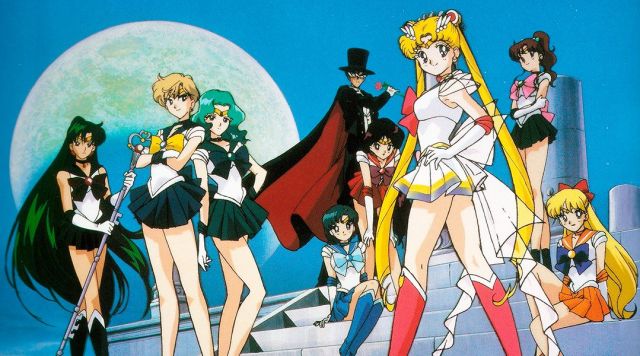
To be fair, a lot of these elements are in Josei as well but the treatment is often quite different. And this treatment of the elements is where you have people interpreting shows differently. Still, I think it’s great. When I was younger it was really weird for a boy to like Sailor Moon. Like people would make fun of them if they knew what Sailor Moon was. But now, it’s like if you’re a boy you may not be mature enough to appreciate Sailor Moon but you’ll get there!
Maybe it’s just me, but the thought makes me happy. And it all started because I don’t know what Madoka is…